After a long journey, the first thing most of us want to do is put down our luggage, unpack and relax.
But before settling into a hotel room or short-term rental, take a few minutes to check your surroundings.
A quick room check cannot guarantee that every hidden device will be found, but it can help you notice unusual objects and protect your personal space.
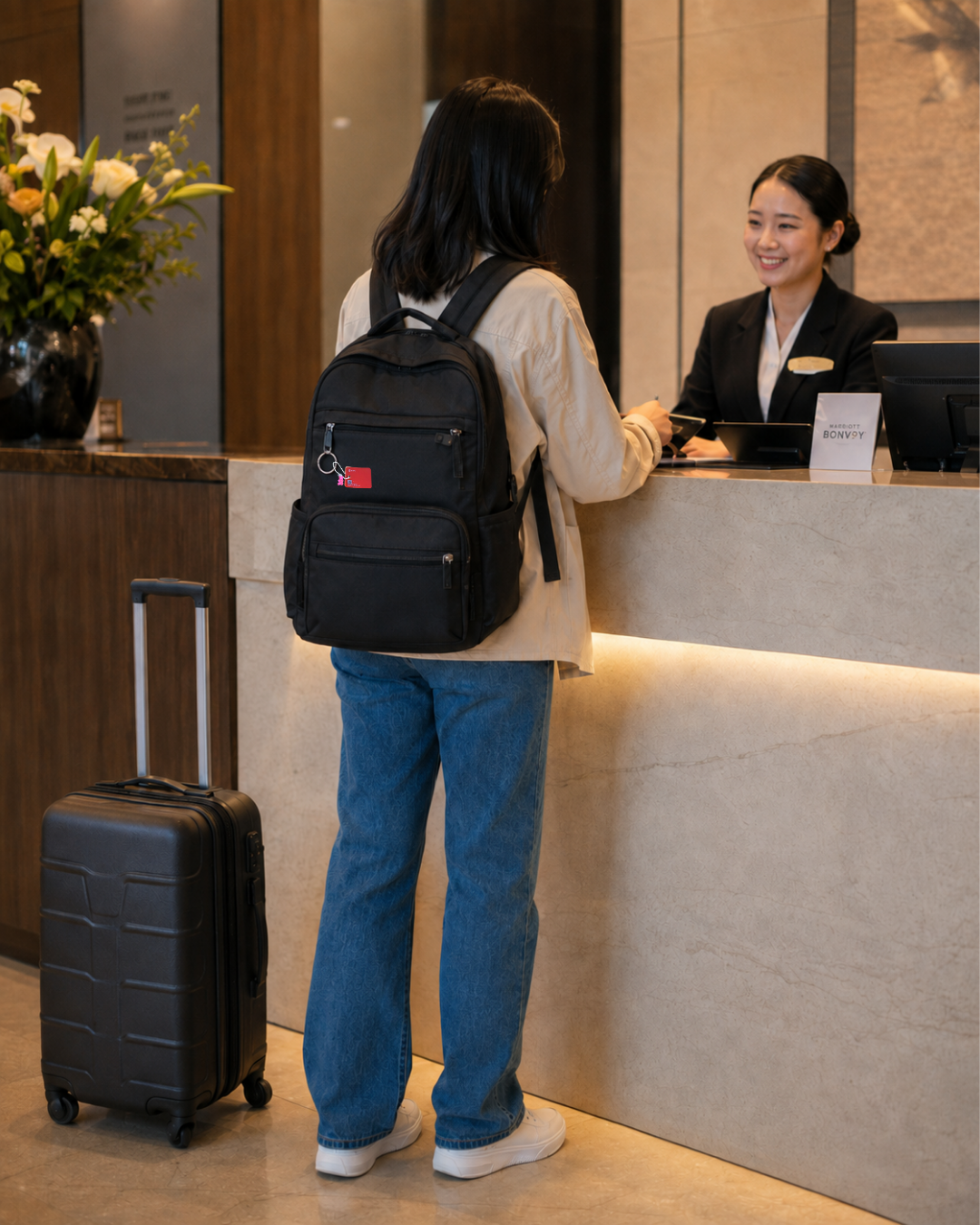
Start by Looking at the Room’s Layout
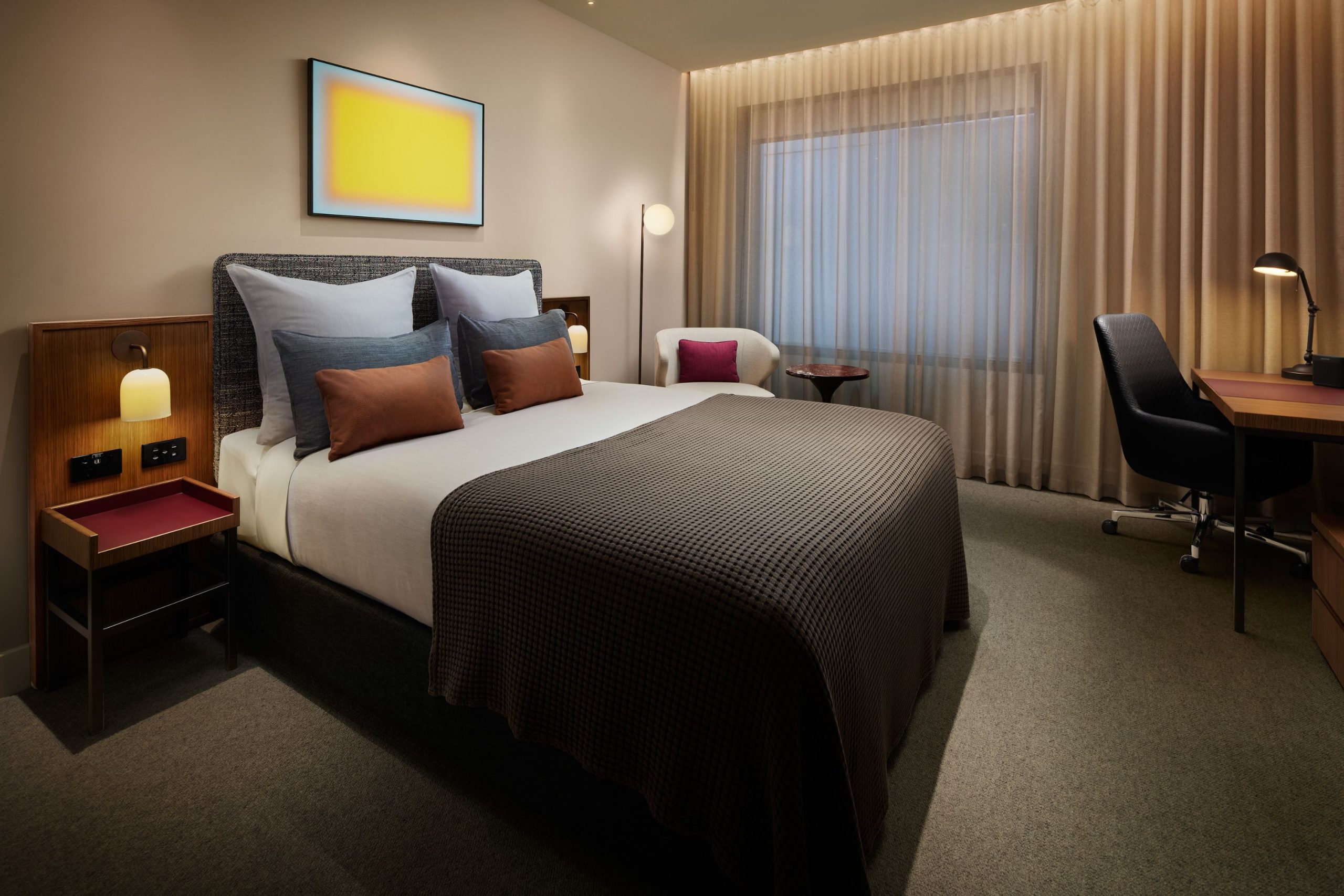
Stand near the entrance or at the foot of the bed and look around the room.
Instead of checking every object randomly, consider what a camera placed in each location would be able to see.
Pay particular attention to objects facing:
- The bed
- The bathroom or shower
- A changing area
- A desk or seating area
- A mirror
An ordinary object may deserve a closer look when it appears to be positioned at an unusual angle or has a small opening facing a private area.
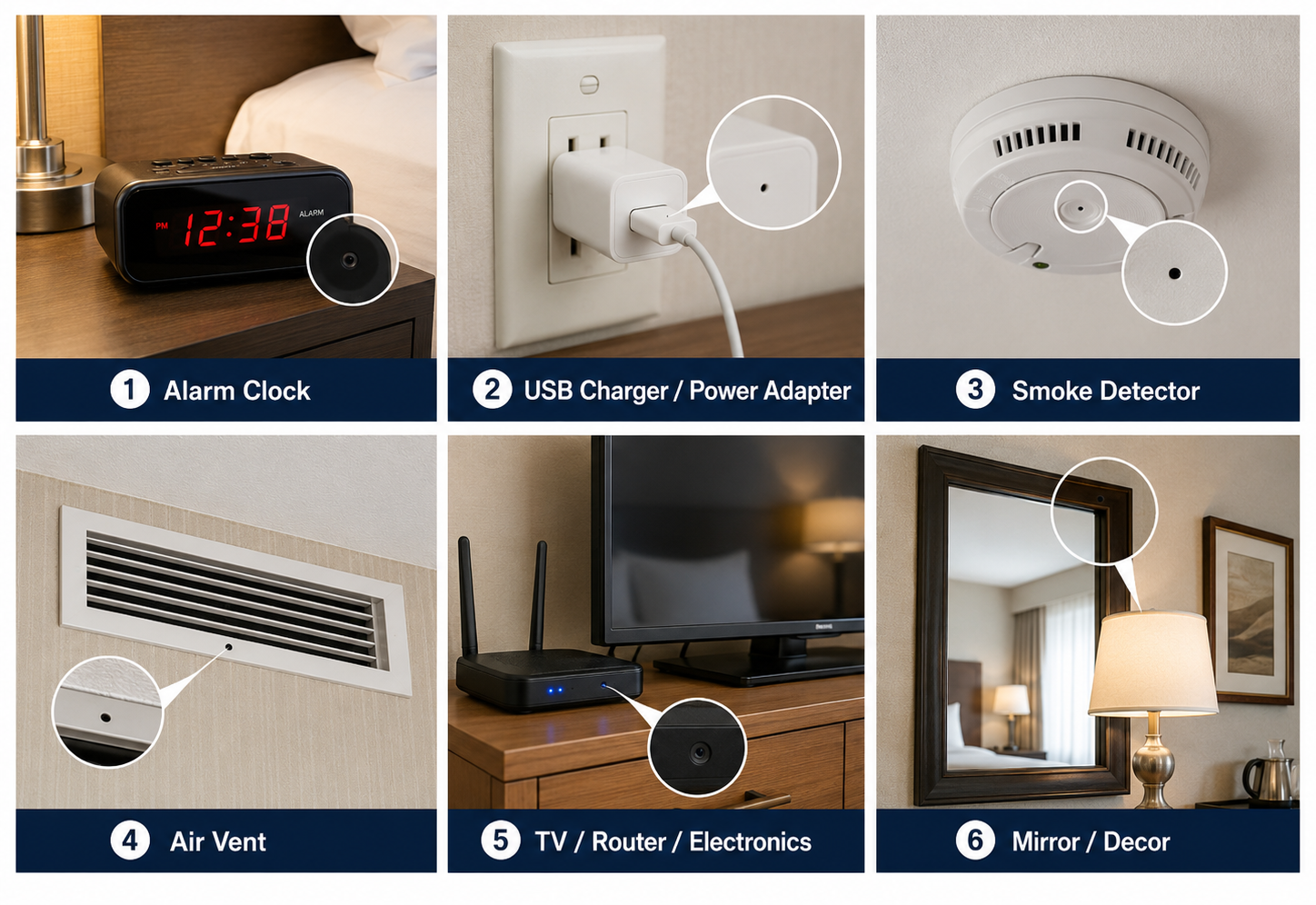
Common Places to Check
Alarm Clocks - often placed directly beside a bed and normally contain screens, buttons and small openings. This can make an unusual hole or lens difficult to notice.
Check the front panel, speaker openings and reflective surfaces.
USB Chargers and Power Adapters - inspect chargers or adapters that were already in the room, particularly when they are pointed toward the bed.
Look for unexplained pinholes, dark glossy sections or parts that appear different from a normal charger.
Smoke Detectors and Air Vents - objects installed near the ceiling can provide a wide view of the room.
Check whether the device appears properly installed and whether any small opening is directed toward the bed or bathroom.
Do not remove or damage safety equipment. Contact the property staff when something appears suspicious.
Televisions, Routers and Electronic Devices - look around television frames, set-top boxes, Wi-Fi routers, speakers and other electronic equipment.
These objects naturally contain lights and sensors, so check their position and purpose rather than assuming that every small opening is dangerous.
Mirrors and Decorative Objects - inspect picture frames, mirrors, tissue boxes, lamps and decorations that seem unnecessarily positioned toward a private area.
The object itself may be ordinary, but its viewing angle can provide an important clue.
A Compact Tool for Your Travel Routine
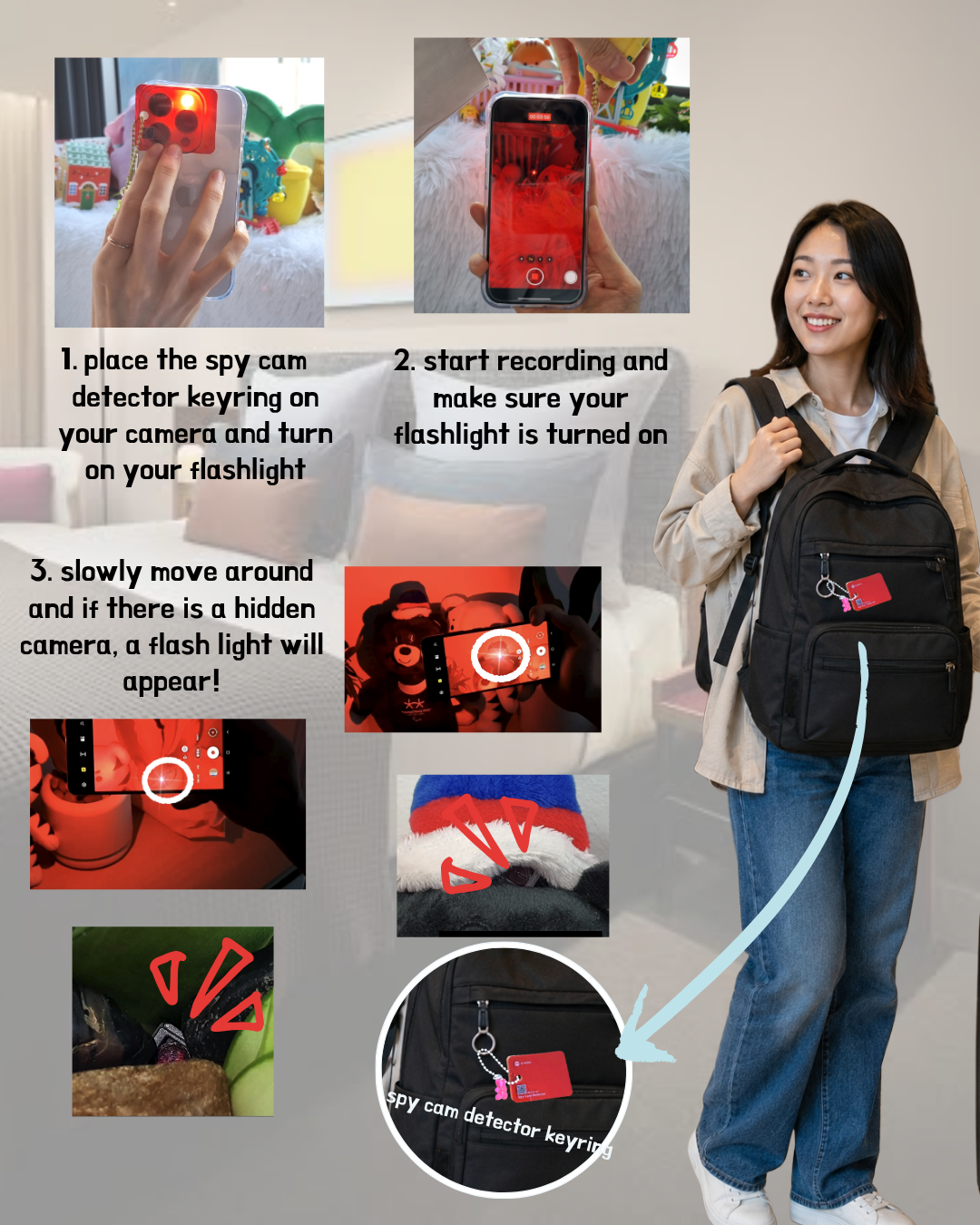
The GKIDA Spy Cam Detector Keyring is a small card-style safety item designed to help users check suspicious areas for camera-lens reflections.
Its lightweight keyring format makes it easy to attach to a handbag, backpack, hotel key pouch or travel organizer.
Just as you check the door lock, emergency exit and room safe, checking your personal space can become another small travel habit.
Here's three step on how to use use GKIDA Spy Cam Detector:
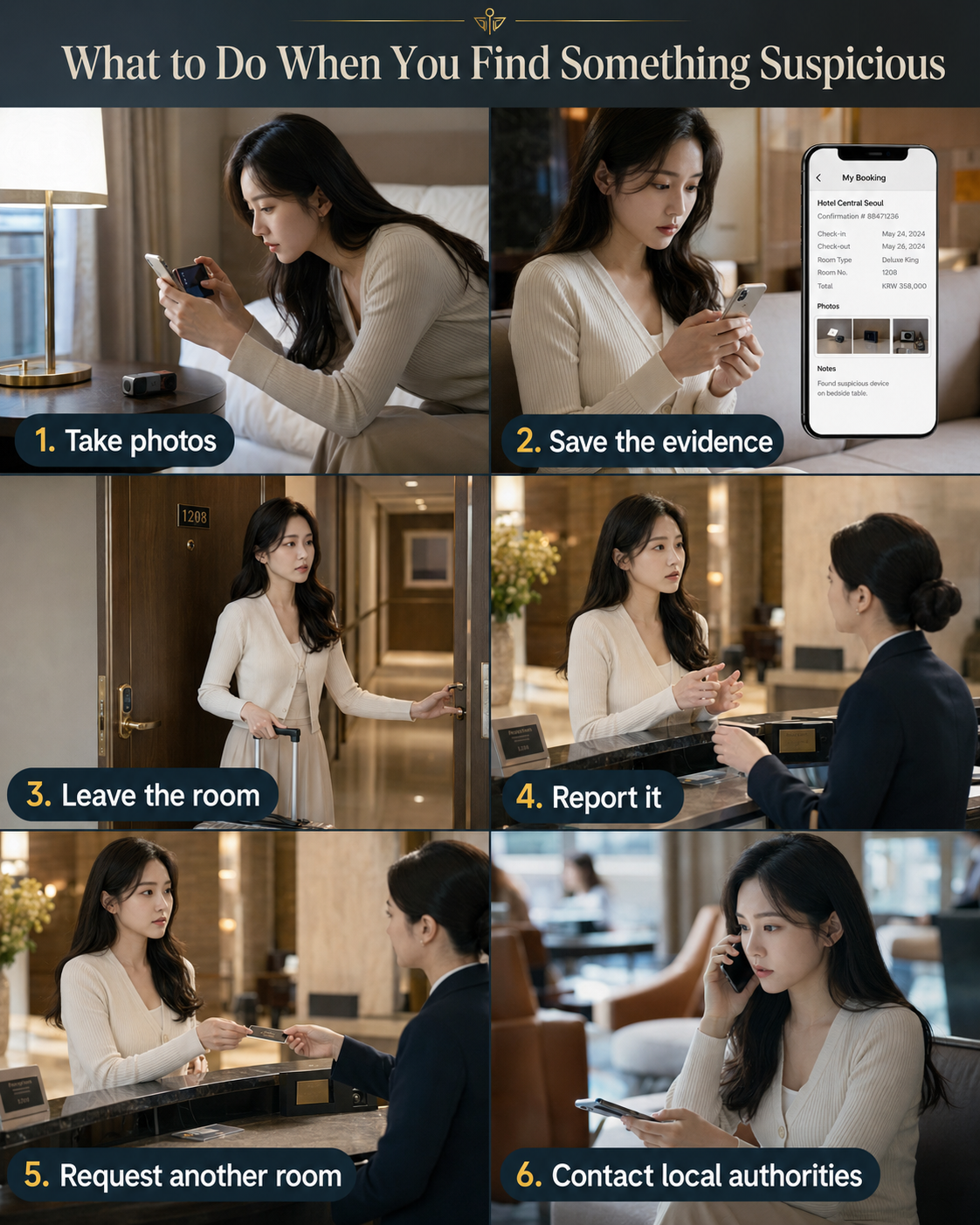
What to Do When You Find Something Suspicious
Do not immediately touch, unplug or dismantle the object unless you need to leave an unsafe situation.
Instead:
- Photograph the object and its position when it is safe to do so.
- Preserve booking records, photographs and relevant communications.
- Leave the room or move to a safe public area.
- Contact hotel management or the booking platform.
- Request another room or alternative accommodation.
- Contact local law enforcement when you believe an illegal recording device is present.
Airbnb currently prohibits security cameras and recording devices that monitor indoor areas, even when they are switched off, and strictly prohibits hidden cameras.
Make the Check Before You Unpack
A privacy check does not need to create fear or take a long time.
It is simply a way to become familiar with an unfamiliar room before relaxing inside it.
Before opening your suitcase, take a few minutes to look at the objects around you, check anything facing a private area and pay attention to anything that feels out of place.
Small safety habits can make unfamiliar places feel a little more comfortable.
Travel prepared. Protect your personal space with GKIDA.